Sunday, 8 June 2025

The Psychology Behind the Breakup of Elon Musk and Donald Trump

According to former White House strategist Steve Bannon, what really caused the crash was when the president refused to show Musk the Pentagon’s attack plans for any possible war with China.


By Geoff Beattie, Edge Hill University

It is not a good break-up. These were always two big beasts used to getting their own way. Two alpha males, if you like the evolutionary metaphor, trying to get along. And now the Donald Trump and Elon Musk relationship is in meltdown.

Who could forget that iconic image from just a few short weeks back? Elon Musk standing behind the seated US president, Donald Trump, in the Oval Office, towering over him. Trump, his hands clasped, having to turn awkwardly to look up at him. That silent language of the body. Musk accompanied by his four-year-old, a charming and informal image, or that great evolutionary signal of mating potential and dominance, depending on your point of view.

These were also clearly two massive narcissistic egos out in their gleaming open-top speedster. Musk was appointed special advisor to Trump, heading the Department of Government Efficiency, cutting excess and waste. The backseat driver for a while.

There were a lot of bureaucratic casualties already, roadkill at the side of the highway as the sports car roared on with frightening speed. But things were always going to be difficult if they hit a bump in the road. And they did. Perhaps, more quickly than many had imagined.

There were differing views on what caused the crash. Many pointed to the dramatic fall in Tesla’s sales – a 71% fall in profits in one quarter – and the inevitable impact on Musk’s reputation. Since the break-up, Tesla’s share price has also dropped sharply, as investors have panicked. The attacks on Tesla showrooms couldn’t have helped either.

Others pointed to Trump’s proposed removal of the tax credit for owners of electric vehicles, or the political backlash in Washington over Space X’s potential involvement in Trump’s proposed “golden dome” anti-missile defense system.

However, according to former White House strategist Steve Bannon, what really caused the crash was when the president refused to show Musk the Pentagon’s attack plans for any possible war with China. There’s only so far being the president’s best buddy can get you. Bannon is reported as saying: “You could feel it. Everything changed.” That, according to Bannon, was the beginning of the end.

Elon Musk has criticised Trump’s ‘big, beautiful bill’.

So now we watch Trump and Musk stumbling away from the crash scene. One minute Trump is putting on a show for the cameras. He’s beaming away and introducing the “big, beautiful bill”, a budget reconciliation bill that rolls together hundreds of controversial proposals. Next, he is accusing Musk of “going crazy” and talking about withdrawing government contracts from the Musk empire.

Musk is unhappy too. “I’m sorry, but I just can’t stand it anymore. This massive, outrageous, pork-filled Congressional spending bill is a disgusting abomination,” he wrote on X. “Shame on those who voted for it: you know you did wrong.”

Rejection and repositioning

He says he’s disgusted by the bill. Disgust is one of the most primitive of all the emotions. A survival mechanism – you must avoid what disgusts you. He’s social signalling here, alerting others, warning them that there’s something disgusting in the camp.

Musk is highly attuned to public perception, perhaps even more so than Trump (which is saying something). With his acquisition of X (formerly Twitter), Musk was able to direct (and add to) online discourse, shaping public conversations.

Psychologically, Musk’s rejection of Trump is an attempt to simultaneously elevate himself and diminish the man behind the bill. He can call out the president’s action like nobody else. He is positioning himself anew as that free thinker, that risk taker, innovative, courageous, unfettered by any ties. That is his personality, his brand – and he’s reasserting it.

Trump on Musk’s criticism of the ‘big beautiful bill’

But it’s also a vengeful act. And it’s perhaps reminiscent of another political insider (and geek), former Downing Street adviser Dominic Cummings, who was sacked by the then UK prime minister, Boris Johnson, in 2020. Cummings was accused of masterminding leaks about the social gatherings in Downing Street.

He went on to criticise Johnson as lacking the necessary discipline and focus for a prime minister as well as questioning his competence and decision-making abilities. The revenge of a self-proclaimed genius.

And revenge is sweet. In a 2004 study, researchers scanned participants’ brains using positron emission tomography (PET) – a medical imaging technique that is used to study brain function (among other things) – while the participants played an economic game based on trust. When trust was violated, participants wanted revenge, and this was reflected in increased activity in the reward-related regions of the brain, the dorsal striatum.

Revenge, in other words, is primarily about making yourself feel better rather than righting any wrongs. Your act may make you appear moral but it may be more selfish.

But revenge for what here? That’s where these big narcissistic egos come into play.

Psychologically, narcissists are highly sensitive to perceived slights – real or imagined. Musk may have felt Trump was attempting to diminish his achievements for political gain, violating this pact of mutual respect. This kind of sensitivity can quickly transmogrify admiration into contempt.

Contempt, coincidentally, is the single best predictor of a breakdown in very close relationships.

Disgust and contempt are powerful emotions, evolving to protect us – disgust from physical contamination (spoiled food, disease), and contempt from social or moral contamination (betrayal, incompetence). Both involve rejection – disgust rejects something physically; contempt rejects something socially or morally. Musk may be giving it to Trump with both barrels here.

Break-ups are always hard, they get much harder when emotions like these get intertwined with the process.

But how will the most powerful man in the world respond to this sort of rejection from the richest man in the world? And where will it end?The Conversation

By Geoff Beattie, Professor of Psychology, Edge Hill University

Subscribe to support our independent and original journalism, photography, artwork and film.

West Africa’s Designers are World Leaders When it Comes to Producing Sustainable Fashion

West African fabrics and design offer a more sustainable way to produce fashion 


By Adwoa Owusuaa Bobie, Kwame Nkrumah University of Science and Technology (KNUST)

Every few weeks global fast fashion brands mass produce their latest clothing, pumping out garments to be sold around the world. There is growing criticism that it’s socially irresponsible to produce such large volumes of clothes so often. It leads to surplus and waste that takes a toll on the environment. And by requiring new styles so often it also stifles designers’ creativity in an industry that thrives on it.

Sustainable fashion means clothes being produced and consumed in ways that are socially responsible. But the conversation about sustainable fashion has centered mainly on the western and Asian fashion industries. Africa is discussed only as the dumping ground for the tonnes of disposable and secondhand clothes produced by fast fashion brands. My study bridges this gap by showing how fashion designers in west Africa produce their work.

Prèt-a-porter (ready-to-wear) clothing is mass produced by fashion houses – as opposed to couture that is made to measure. West African fashion designers produce what I have termed customised prèt-a-porter – a limited-edition ready-to-wear model that creates the latest fashions in measured volumes.

This is a model for sustainable fashion that allows more space for creativity and innovation and also uses environmentally friendly laundry measures to ensure the long lifespan of clothes.

Customised ready-to-wear fashion

Fashion from Africa has attained global recognition thanks to the creativity of today’s designers. However, very little is known about how the production strategy they use contributes to sustainable fashion.

Designers in Africa are likely to face economic, social, and political challenges that limit production and efficiency in the industry. However, many of the designers in my west African study turned these challenges on their head: while the market limits the possibilities of scaling up production, it in effect endorses innovative sustainable fashion practices.

But west Africa’s contribution to sustainable fashion is not just shaped by what the market won’t allow. As I find in my study, designers are also guided by the socio-cultural milieu of the fashion consumption in the cities where they live. Designers tap into this culture and grow it.

I found that the factors that shape fashion consumption in west Africa include the need to produce clothes that assert social and economic status (exclusivity), the ability to make designs that are not easily replicated (uniqueness), and the creativity to project the personality of each client in the clothes (individuality). While these needs can easily be met through bespoke production, applying them to the kind of ready-to-wear mass production done by fast fashion brands in the west is challenging. Not so with west Africa’s customised prèt-a-porter fashion model.

West African designers offer a much wider variety of creative designs compared to the homogenised designs of fast fashion brands. Most release collections only twice a year – summer and winter – instead of every two weeks like western fast fashion brands. By producing collections less often, west African designers can invest time in creating innovative designs.

Exclusivity, uniqueness and individuality

To achieve exclusivity yet remain affordable, many west African designers use cheaper machine-produced African wax print fabrics but design them flamboyantly to attain a high-end fashion standard. Or some might combine socially valued cloths with less socially valued ones. For example, wax print is combined with exclusive fabrics like the handwoven cloths aso oke and kente or with lace and other imported fabrics.

Making unique designs often requires a little tweaking of popular styles – like offering different sleeve styles and necklines, or using appliques and accessories. Laurie, a participant of the study explains that in stocking different shops across the world with her collection, “I give you at least three sizes … and then maybe two [styles] each”. Thus, in one store, she might stock two pieces of one design across the four sizes she produces, producing eight variations of one design. Of the 40 or 50 pieces she offers a store she’s featuring five or six unique designs.

Most designers emphasised the need to project personality through their pieces. Some do this by catering to a particular target market – like corporate women, businessmen and religious leaders. A Ghanaian designer like Naa projects her personality through her clothes by making something “Naa would like to wear”. Before she produces a collection, she makes a few pieces for herself within the prevailing trend in order to test the market. The styles that receive the most compliments become her collection.

Longer lasting and sustainable

By considering the consumer’s socio-cultural needs in the production process, designers produce more personalised pieces. These create an emotional bond between the clothes and the wearers. Clothes become difficult to part with and are kept for longer, extending the shelf life of west African fashion.

Long periods for the sale of each collection also prevents the pile-up of unsold clothes.

And the traditional methods of maintaining and laundering clothes doesn’t just protect the clothes, it also protects the environment. Hand washing is a longstanding method of caring for locally produced clothes and designers insist that this old method is the best. They instruct their customers on how to maintain the clothes through aeration and hand washing. This reduces the frequency of washing, protecting the environment from high emissions of carbon dioxide and pollution from dyes.

The longevity and exclusivity of the clothes offers a great alternative to the imported second-hand clothing that often ends up in landfills. (That said, the clothing market in west Africa lacks a well-structured second-hand clothing trade system for locally-produced fashion. This would ensure the even distribution of quality clothes among people with different socio-economic backgrounds.)

Ultimately, however, recycling or upcycling are reactive solutions to problems created by fast fashion. Customised prèt-a-porter production, on the other hand, is a proactive way of addressing unsustainable fashion practices.The Conversation

Adwoa Owusuaa Bobie, Research Fellow, Center for Cultural and African Studies, Kwame Nkrumah University of Science and Technology (KNUST)

Subscribe to support our independent and original journalism, photography, artwork and film.

Friday, 6 June 2025

Meet Maria Clementina Sobieska, the Defiant Queen Who Pulled off a Jailbreak to Secure the Jacobite Legacy

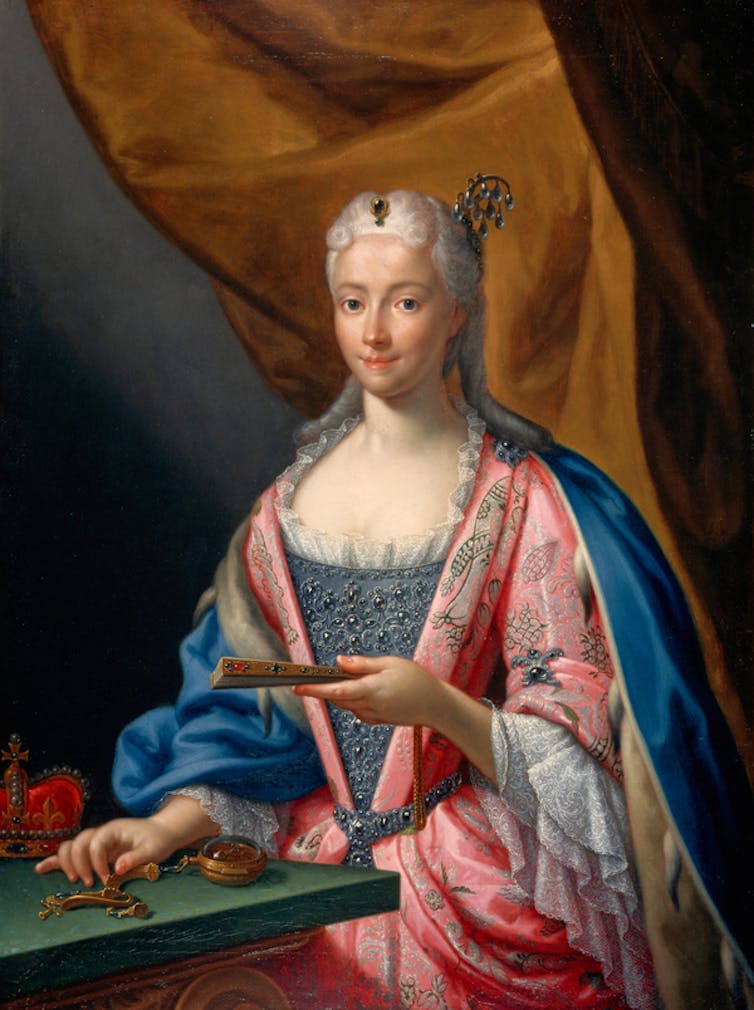
Maria Clementina Sobieski, 1727/8, by Martin van Meytens (after), Scottish National Gallery. Cover picture of Issey Miyake AW25 in Paris by Andrea Heinsohn for DAM

By Darius von Guttner Sporzynski, Australian Catholic University and Aleksandra Skrzypietz, University of Silesia in Katowice

Maria Clementina Sobieski is one of only three women buried in the famous St Peter’s Basilica in Vatican City, alongside an estimated 100 or so popes. She lived a life of extraordinary defiance and determination.

Born in 1701 in Oława, Poland, Maria Clementina was the granddaughter of King John III Sobieski of Poland, who was famous for his victory in the 1683 Battle of Vienna against the forces of the Ottoman Empire.

While this ancestry provided Maria Clementina her status as a princess, it also came with significant challenges, by placing her at the centre of 18th century European dynastic politics.

At just 17 years old, she was betrothed to James Stuart, the Jacobite claimant to the British throne. This match, which held immense political and religious significance, was agreed to by her father, Jakub, after negotiations with Stuart.

But her journey to marriage wouldn’t simple. It required a daring escape from imprisonment in Innsbruck, where she was held by Emperor Charles VI in a bid to prevent her union with Stuart.

Francesco Bertosi’s painting, ‘Princess Maria Clementina Sobieska, 1701–1735. Wife of Prince James Francis Edward Stuart’, 1719. National Galleries of Scotland

A high-stakes abduction

The marriage between Maria Clementina and James Stuart was a direct challenge to the Protestant king George I of Great Britain.

James Stuart, also known as the Old Pretender, was living in exile and sought to reclaim the British throne that was his by birthright. His marriage to Maria Clementina, which was endorsed by Pope Clement XI, would symbolise Catholic unity against growing Protestant dominance.

Recognising this political threat, George I asked Emperor Charles VI, his ally, to order Maria Clementina’s detention in Innsbruck while she was en route to her wedding.

Her confinement was intended to coerce her family into annulling the engagement. However, Maria Clementina, bolstered by her unwavering faith and determination, refused to capitulate.

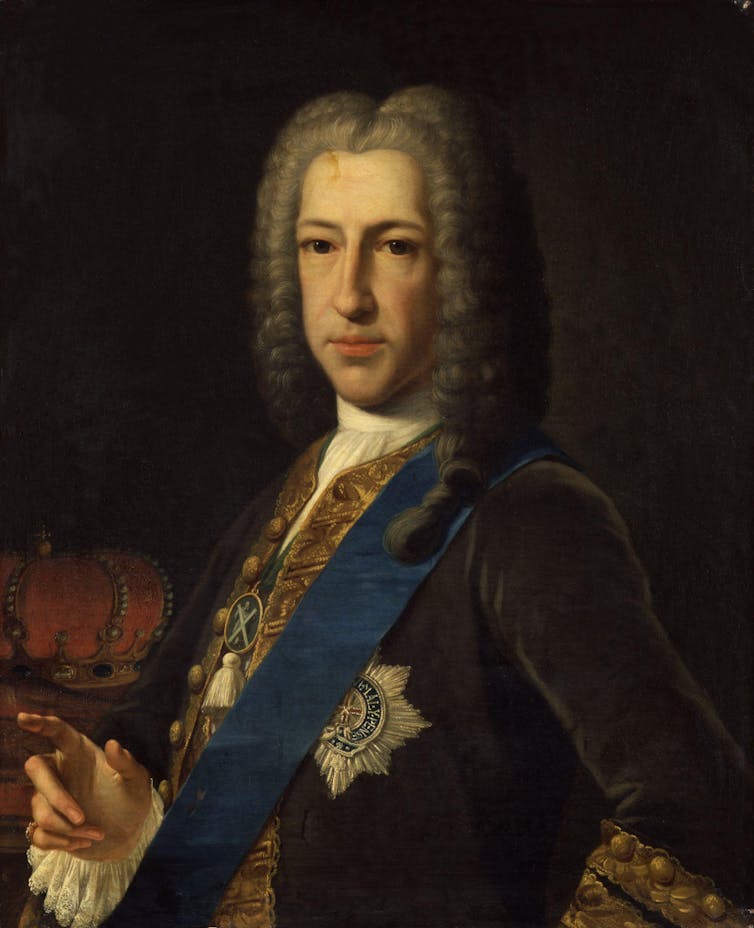
Anton Raphael Mengs’s painting, ‘Prince James Francis Edward Stuart’, circa 1740s. Wikimedia

The perilous escape

Maria Clementina’s imprisonment at the hands of Charles VI lasted six months. During this time, she kept her spirits high through correspondence with James Stuart and her father, Jakub. Meanwhile, plans for her escape were set in motion by Charles Wogan, an Irish Jacobite loyal to Stuart.

The princess disguised herself by switching clothes with the servant of one of her rescuers, Eleanor Misset. She then slipped past imperial guards with a small group posing as a travelling family.

The escape involved avoiding imperial agents and enduring significant physical hardship, including traversing the harsh and mountainous Brenner Pass in the Alps.

In one instance, after a carriage axle broke, Maria Clementina and Eleanor Misset were forced to walk a considerable distance to find shelter. Despite the gruelling journey, Maria Clementina demonstrated remarkable resolve, earning the admiration of her companions.

Reaching safety and marriage

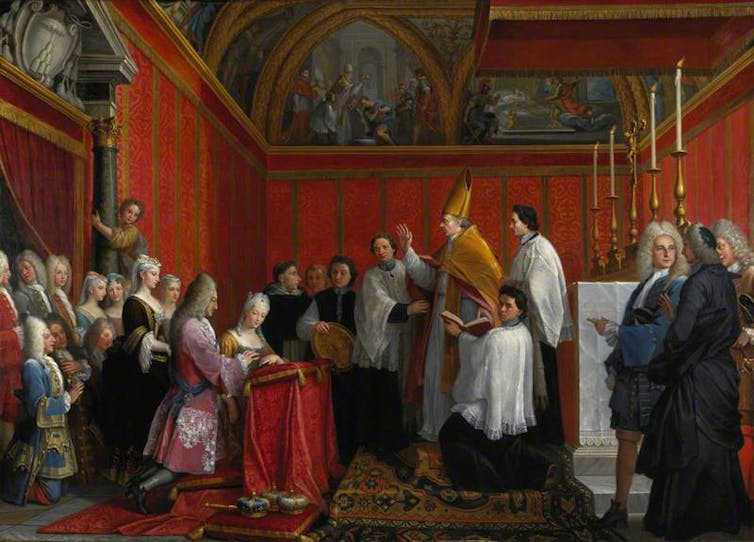
After crossing into Italy, the group arrived in Bologna, where Maria Clementina rested and prepared for her new role as James Stuart’s wife. Her wedding took place on May 9 1719 in a modest ceremony.

Although James Stuart was absent (not unusual for high-profile dynastic alliances at the time), the marriage formalised their union and reinforced the Jacobite claim to the British throne.

Maria Clementina wore a white dress to symbolise mourning for James Stuart’s late mother, Maria Beatrice d’Este. The ceremony was attended by Jacobite activist Charles Wogan and other members of the escape team, including Eleanor Misset.

And so Maria Clementina became the titular Catholic queen of England, Scotland and Ireland.

Agostino Masucci’s ‘The Solemnisation of the Marriage of James III and Maria Clementina Sobieska’, circa 1735. National Galleries of Scotland

Motherhood and family challenges

Maria Clementina’s bold actions ensured the continuity of the Jacobite line. On December 31 1720 she gave birth to her first son, Charles Edward Stuart, later known as Bonnie Prince Charlie.

He was baptised within the hour by Father Lawrence Mayes, the same bishop who officiated his parents’ wedding, and his birth was widely celebrated by Jacobite supporters.

Maria Clementina’s second son, Henry Benedict Stuart, was born on March 6 1725 and was later made Duke of York.

A monument in St Peter’s Basilica dedicated to the royal Stuarts, James and his sons, Charles and Henry. Wikimedia, CC BY-SA

While the birth of her sons brought joy and hope to the Jacobite cause, Maria Clementina’s relationship with James Stuart grew strained.

As one household observer remarked:

their tempers are so very different that though in the greatest trifles they are never of the same opinion, the one won’t yield an inch to the other.

James neglected Maria Clementina. The pair also clashed over their sons’ education, further straining the marriage.

The later years

By the end of 1725, Maria Clementina’s frustrations with her marriage reached a breaking point. She left James and took up residence at the convent of St Cecilia in Trastevere, Rome, leaving her young sons behind.

For two years she embraced a devout lifestyle, focusing on her own welfare. Her return to James in 1728 was marked by a withdrawal from court life, and she spent much of her time in seclusion at Rome’s Palazzo Muti.

John Pettie (1834-93), ‘Bonnie Prince Charlie Entering the Ballroom at Holyroodhouse’, before April 1892. Royal Collection Trust, CC BY-NC-SA

Despite her struggles, Maria Clementina’s legacy as a mother was significant. Charles Edward Stuart and Henry Benedict Stuart carried the Jacobite cause forward, their lives shaped by the resilience and determination demonstrated by their mother. Her commitment to their futures ensured the Jacobite line endured, even as political realities shifted.

Maria Clementina died on January 18 1735 at the age of 32. She was given a royal funeral in St Peter’s Basilica, where she was interred with honours befitting her status as queen. Her heart was enshrined separately in the church of the Twelve Holy Apostles in Rome.The Conversation

Darius von Guttner Sporzynski, Historian, Australian Catholic University and Aleksandra Skrzypietz, Professor of History, University of Silesia in Katowice

Subscribe to support our independent and original journalism, photography, artwork and film.

Saturday, 31 May 2025

Do We See Colour the Same Way? What Scientists Can Learn from Artists

Photograph: TSViPhoto/Shuttestock. Cover picture by Anna Nguyen of the Resort 2026 collection by Australian label, Romance Was Born.

By Sasha Rakovich

As many people sit at the wheel of their car, they are certain they know what colour is. It’s the red traffic light in front of them, the garish yellow hatchback in the next lane, or the green verge banking to their right.

Colour, as many people understand it, is the property of a thing. That light is green. The sky is blue. But scientifically, that’s not quite true. No one can experience the exact same colour as you do. Colour is a perceptual experience created by our brains.

It’s the interaction between a material, light and the mind. The way a material absorbs, and scatters light affects what reaches our eyes. And colour needs to be processed by the brain.

The shape of objects and the context in which you encounter them can also shape the way you perceive colour. If you’ve ever picked a paint colour that looked perfect in the shop but turned into something entirely difference once on your walls, you’ve already encountered this phenomenon.

This notion of colour as experience was recently shown in a study by researchers at the University of California, Berkeley, who used lasers to manipulate participants’ eyes into seeing a new colour – a blue-green they call olo.

To achieve this, the scientists used lasers to activate specific photoreceptor cells in the retina that detect green wavelengths of light, called M cones. We also have S and L cones, types of photoreceptors that detect short blue, and longer red wavelengths of light respectively. Everyone has slight variations in the number and sensitivity of these cones, so we each experience colour a little differently.

Outside the lab, the reflected light that comes into our eyes illuminates large areas of the retina, which stimulates multiple cone types. The wavelengths perceived by the M and L cones overlap by over 85%. This means that under natural conditions, the two are always activated together, but in varying degrees.

By targeting just the M cones, the scientists at Berkeley have in essence created a pure colour. Olo doesn’t have context or material conditions. It will look the same to different people.

But this isn’t the only example which shows the place of the brain in colour perception.

The most common type of red-green colour blindness, deuteranomaly, occurs when the M and L cones overlap more than they should. This reduces people’s ability to distinguish between colours in that range, without affecting sharpness or brightness.

Language may play a role in colour perception, influencing how easily or accurately we discriminate between colours, especially when languages differ in how they categorise or label colour distinctions. This highlights the gulf between an objective property and the processing of the brain.

The difference between the subjective experience of colour and the fixed, physical means of producing it means that most artists’ search for “pure” paint will fail. British artist Stuart Semple recently claimed he’d recreated olo in paint form. He called the paint yolo. But when people look at it, M and L cones will be activated at the same time. A “pure” paint is still impossible.

Semple’s Black 3.0, along with other ultra-black materials, is marketed as a “pure” black paint. It absorbs nearly all light, using a high concentration of light-absorbing pigments and a matte binder to minimise reflections. But instead of offering a pure colour, it removes colour altogether – delivering a universal experience of “black” by eliminating visual stimulus.

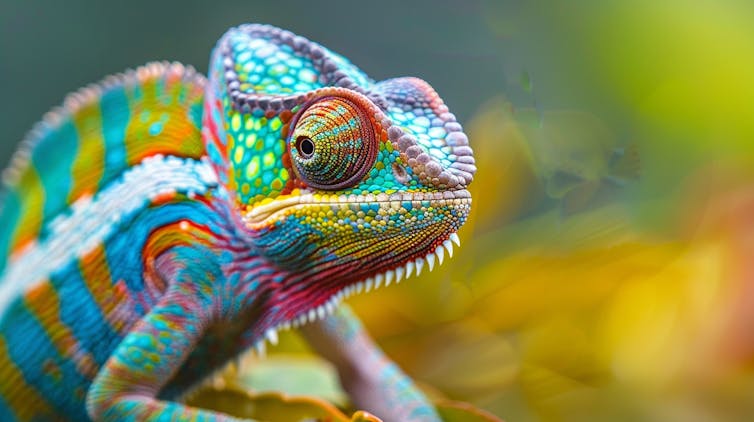
Close up of chameleon
Colour is never static. gkkhjn/Shutterstock

In truth, artists have known colour is a matter of perception for quite some time. The modernist artist Mark Rothko was notoriously meticulous about how his work was displayed. Rothko insisted that his work be hung low, with as little white wall visible as possible, in dim light.

He was shaping the experience of colour his work presented to the onlooker by controlling brightness, contrast and the surroundings. Rothko, like the scientists at Berkeley, recognised that colour is an interaction between material, light and observer. It is not just about manipulating what we don’t see, but about engineering what we do.

I have been running a public engagement programme, Transcending the Invisible, which brings together scientists and artists to explore scientific ideas through art. What I’ve been struck by most is that scientists and artists share this understanding of colour as experience.

The future of colour

Why do so many artists want to patent the blackest black, the bluest blue or the pinkest pink if they know that colour can’t be made “pure” with pigment?

Berkeley researcher Austin Roorda described having a “wow” experience at perceiving something entirely new when he saw olo.

We need to accept that colours like Semple’s yolo can create a similar wow feeling.

The work at Berkeley opens the door to a much more direct experience of colour than we’ve ever had before. Scientists in the future may map the photoreceptors and parts of the brain which process colour, allowing them to beam a range of direct and repeatable experiences into people’s brains.

It’s important to note that colour isn’t just sensory data but something that shapes how we feel, remember and connect to the world. Artists like Rothko, Van Gogh and Kandinsky had an innate understanding of that which scientists are only now starting to piece together.The Conversation

Sasha Rakovich, Senior Lecturer in Physics, King's College London

Subscribe to support our independent and original journalism, photography, artwork and film.

Monday, 26 May 2025

Tom Cruise’s Stunts in Mission: Impossible Movies are Feats of the Human Body

Tom Cruise doing his own stunts in Mission: Impossible - Dead Reckoning, riding a motorcycle off a cliff before letting go mid-air and falling to the ground. Photograph: FlixPix/Alamy. Cover picture by Andrea Heinsohn for DAM

By Dan Baumgardt

He’s leapt from cliffs, clung to planes mid-takeoff and held his breath underwater for as long as professional freedivers. Now, at 62, Tom Cruise returns as Ethan Hunt for one final mission – and he’s still doing his own stunts.

Cruise in another death-defying scene 
from thenew Mission: Impossible 
- The Final Reckoning. Photograph: 
Paramount Pictures & Skydance via AP
With Mission: Impossible – The Final Reckoning, the saga reaches its high-stakes finale. But behind the scenes of death-defying spectacles lies a fascinating question: just how far can the human body be pushed – and trained – to pull off the seemingly impossible?

And at what cost? In filming the eight Mission: Impossible films, Cruise has suffered a broken ankle, cracked ribs and a torn shoulder.

Your mission, should you choose to accept it, is to consider the capabilities – and limits – of the human body in being able to achieve these awesome heights. How much is it possible to train to achieve the apparently impossible?

Breathing underwater

Performing his own stunts, Tom
Cruise climbs the dizzyingly tall
Burj Khalifa in Mission: Impossible
Ghost Protocol. Photograph: David James
In Mission: Impossible – Rogue Nation, Hunt navigates an underwater vault to recover a stolen ledger. Cruise wanted to film this all-in-one take and sought help from freediving instructors in order to hold his breath for the required time – over six minutes!

The average human can hold their breath for about 30 to 90 seconds. That’s without training. Although there’s an innate diving reflex built into the human body that allows it to temporarily adapt to immersion underwater.

The response is to lower the heart rate and redirect blood to the body’s core, essentially enabling it to lower its metabolic demand and preserve the function of the vital organs, like the brain and heart.

All well and good, but consider now the need to swim, as well as resist the pressure of the water pressing on the lungs. And also while fighting that desperate urge as a result of rising CO₂ to take a deep breath – which, underwater, would be catastrophic.

And if the diver’s oxygen levels fall too low, they might black out and lose consciousness. That’s why shallow water drowning is a real risk here.

That’s where freediving training comes into play. With practice, there are several ways you can increase the time you’re able to remain underwater. These include mastering breathing techniques to retain the maximum amount of air in the lungs. Sustained practice might also lead to increased oxygen storage capacity in the bloodstream.

This process takes months to years to attain and might lengthen the immersion time, on average, to around five minutes. What Cruise managed to achieve was nothing short of exceptional.

The official trailer for Mission: Impossible – Final Reckoning.

Free climbing – and that scene

Mission Impossible films often open with Ethan Hunt working his way up some impossibly sheer building or cliff face with the agility of a mountain goat. He appears to be free climbing without a harness, and at the start of Mission: Impossible 2, clinging on with just one hand. While Cruise used safety wires to secure himself, the climbing was 100% real.

Tom Cruise suspended precariously from the ground
in the exciting original Mission: Impossible film
Then, of course, how could we forget that scene? The one in the original Mission: Impossible – where he has to suspend all limbs, centimetres from the ground, to prevent himself from setting off the alarms.

Although Cruise hasn’t revealed his specific training regime for these stunts that I can see – performing any of these actions would require an exceptionally strong back and core.

The muscles of our backs keep the spine straight and upright. Some span the space between back and limb, such as latissimus dorsi, or “lats”. These sheets of muscle, prized by bodybuilders, are also particularly valuable to climbers – allowing you to perform a chin-up, or pull yourself up that rock face.

Besides this, many other muscles are needed for extreme climbing – those that enable a strong grip, allow for reaching and “push offs”, and maintain tension and hold. It’s no wonder climbing is considered one of the best whole-body workouts.

It’s no surprise that Cruise is known to have trained extensively for this. To understand even an element of the difficulty he may have faced, you could try adopting that vault heist pose, with your belly in contact with the floor, and see how long you can hold it. I won’t tell you how pitiful my own attempt was.

What a blast

Another visually striking stunt by
Tom Cruise free running using wires in
Mission: Impossible Ghost Protocol
Photograph: David James
Hunt has also escaped a fair few explosions in his time, from a helicopter in the Channel tunnel to a detonating fish tank in Prague. In Mission: Impossible 3, on the Chesapeake Bay Bridge, another helicopter launching a missile triggers an explosion that sends Hunt smashing into a car. Again, Cruise did it all himself, for the price of two cracked ribs.

Pyrotechnics were used for the explosion, but of course, they couldn’t be used to lift Cruise up and deposit him against the car. The solution? A series of wires were used to drag him sideways. Never has the direction “brace, brace” been so apt.

And just so you know, broken or bruised ribs are far from fun. Some describe them as one of the most painful injuries you can experience, since the simple acts of coughing, sneezing and merely breathing exacerbate the pain.

But Tom Cruise picks himself up yet again, dusts himself off and gets on with it. His motivation? He has reportedly claimed that he wants the audience to experience what it really feels to be in that moment. And what a good sport he is.

This article won’t self-destruct in five seconds.The Conversation

Dan Baumgardt, Senior Lecturer, School of Physiology, Pharmacology and Neuroscience, University of Bristol

Subscribe to support our independent and original journalism, photography, artwork and film.

Saturday, 24 May 2025

At the Cannes Film Festival, Decency and Dress Codes Clash with Fashion’s Red Carpet Revolution

Robert Pattinson's classic tuxedo and Jennifer Lawrence's silk taffeta, pleated Christian Dior gown, inspired by a 1949 Poulenc original, fitted within the Cannes' dress codes, limiting volume and sheerness on the red carpet. Photograph: Anthony Harvey Shutterstock. Cover picture by Andrea Heinsohn for DAM

By Elizabeth Castaldo Lundén

At the Cannes Film Festival, the spotlight moved from movie stars and directors to the festival’s fashion rules. Cannes reminded guests to follow the standard black-tie dress code for evening events at the Grand Theatre Lumière – “long dresses and tuxedos” – while highlighting acceptable alternatives, such as cocktail dresses and pantsuits for women, and a black or navy suit with a tie for men.

The real stir, however, came from two additions to the formal guidelines: a ban on nudity “for decency reasons” and a restriction on oversize garments.

The new rules caught many stylists and stars by surprise, with some decrying the move as a regressive attempt to police clothing.

It’s hard not to wonder whether this is part of some broader conservative cultural shift around the world.

But I study the cultural and economic forces behind fashion and media, and I think a lot of the criticism of Cannes is unfounded. To me, the festival isn’t changing its identity. It’s reasserting it.

Red carpet control

Concerns about indecency on the red carpet have appeared before – most notably during the first televised Academy Awards in 1953.

In 1952, the National Association of Radio and Television Broadcasters adopted a censorship code in response to concerns about television’s influence on young audiences. Among its rules for “decency and decorum” were guidelines against revealing clothing, suggestive movements or camera angles that emphasized body parts – all to avoid causing “embarrassment” to the viewers.

Woman holds paper over her head to protect her hair as she walks across a carpet wearing high heels and a short skirt.
Actress Inger Stevens at the 39th Academy Awards in 1967, a year before she was reprimanded for her skimpy attire. Bettmann/Getty Images

To ensure that no actress would break the decency dress code, the Academy of Motion Picture Arts and Sciences hired acclaimed costume designer Edith Head as a fashion consultant for the show in 1953.

In my book “Fashion on the Red Carpet,” I explain how Head equipped backstage staff with kits to deal with any sartorial emergencies that might arise. That same year, the balcony cameras at the Pantages Theatre accidentally peeked down into the actresses’ cleavage as they walked to the stage. From then on, a supply of tulle – a type of versatile fabric that can easily cover revealing openings that expose too much skin – was kept backstage.

The 1960s posed new challenges. Youth fashion trends clashed with traditional dress codes and television censorship. In 1968, after actress Inger Stevens appeared on the red carpet wearing a mini skirt, the Academy sent a letter reminding attendees of the black-tie – preferably floor-length – dress code. When Barbra Streisand’s Scaasi outfit accidentally turned see-through under the lighting in 1969, Head again warned against “freaky, far-out, unusual fashion” ahead of the 1970 ceremony.

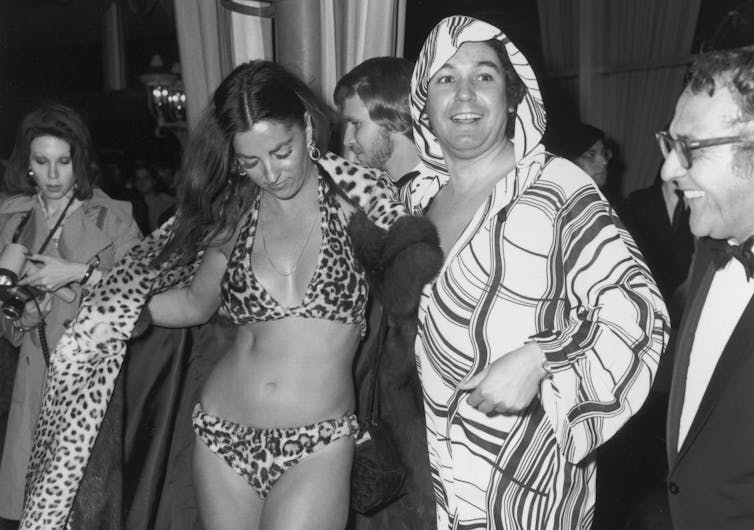
However, in the 1970s, the Oscars eliminated Head’s fashion consultant position. Despite maintaining its black-tie dress code, the absence of a fashion consultant opened the door to some provocative attire, ranging from Cher’s see-through, sheer outfits, to Edy Williams’ provocative, barely-there getups.

Woman wearing leopard-print bikini and leopard-print shawl.
Once the fashion consultant position was eliminated for the Oscars, many attendees – like actress Edy Williams – tried to stand out from the crowd with provocative attire. Fotos International/Getty Images

Old rules in a new era

Racy red carpet appearances have since become a hallmark of awards shows, particularly in the digital age.

Extravagance and shock are a way for celebrities and brands to stand out amid a glut of social media content, especially as brands increasingly pay a fortune to turn celebrities into walking billboards.

And in an era when red carpet looks are carefully curated ahead of time through partnerships with fashion brands, many celebrities expressed frustration about being unable to sport the outfits they had planned to wear at Cannes.

Stylist Rose Forde lamented the restrictions, saying, “You should be able to express yourself as an artist, with your style however you feel,” while actress Chloë Sevigny described the code as “an old-fashioned archaic rule.”

But I still can’t see the Cannes rules as part of any sort of broader conservative backlash.

Whether at the Oscars or the MTV Video Music Awards, backlash over celebrities baring too much skin has gone on for decades. Cannes hasn’t been spared from controversy, either: There was Michelle Morgan’s bikini in 1946, La Cicciolina’s topless look in 1988, Madonna’s Jean Paul Gaultier lingerie in 1991, Leila Depina’s barely-there pearl outfit in 2023 and Bella Hadid’s sheer pantyhose dress in 2024, to name just a few.

Young woman with curly hair and a skimpy beaded dress poses on the red carpet in front of a crowd of photographers.
Cape Verdean model Leila Depina arrives for the screening of the film ‘Asteroid City’ during the 2023 Cannes Film Festival. Christophe Simon/AFP via Getty Images

The festival has routinely reminded guests of its dress code, regardless of the cultural zeitgeist.

The “decency” rule, for example, is actually required by French law. Article 222-32 of the French Criminal Code classifies showing private parts in public as a sexual offense and can lead to a year in prison and a fine. While the legal definition hinges on intent and setting, the festival, as a public event, technically has to operate within that framework.

Compared to white-tie events like the Nobel Prize ceremony or a state banquet, Cannes’ black-tie requirement is relatively flexible. It allows for cocktail-length dresses and even accommodates pants and flat sandals for women.

Meanwhile, the worry about voluminous clothes points to a practical issue: the movement of bodies in tight spaces.

Unlike the Met Gala – where the fashion spectacle is the focus, and its red carpet is a stage for photo-ops – Cannes is a film festival. The red carpet is the main path thousands of people use to enter the theater.

A dramatic gown – like the one worn at the Met Gala by Cardi B in 2024 – could block others and cause delays. While a photo-op may be the primary goal for celebrities and the brands they promote, the festival has a screening schedule to stick to, and attendees must be able to easily access the venue and their seats.

Red carpet rules are fluid. Sometimes they adapt to cultural shifts. Sometimes they resist them. And sometimes, they’re there to make sure you can fit in your seat in the movie theatre.The Conversation

Elizabeth Castaldo Lundén, Research Fellow at the School of Cinematic Arts, University of Southern California

Subscribe to support our independent and original journalism, photography, artwork and film.

Friday, 23 May 2025

Paris’s Iconic Centre Pompidou ~ A Cultural Superstar Facing Economic and Environmental Challenges as it Closes for Renovation this September

The Centre Pomidou will have to close its doors work for renovation work between 2025 and 2030

By Marie Ballarini, Université Paris Dauphine – PSL

Whether known as the Centre Pompidou or simply Beaubourg, this Parisian landmark is set to close its doors from this September until 2030 for extensive renovations. Criticised and even mocked at its opening, the Centre Pompidou has since earned its place as an iconic fixture in the Parisian landscape and a major player on the international museum scene. We take a closer look at the institution’s fragile and unconventional business model at its 50th anniversary.

Inaugurated in 1977, France’s Centre Pompidou will soon celebrate its 50th birthday. This milestone will coincide with its full closure from 2025 to 2030 for much-needed renovations to upgrade and restructure the building.

During the closure, the museum will continue to expand in other ways. A new site will open in Massy (in Essonne department), designed to house its reserves and serve as an exhibition and cultural space. Additionally, the Centre Pompidou plans to strengthen its international presence through temporary exhibitions abroad.

Bruno S. Frey developed the concept of a “museum superstar”, an iconic cultural institution that attracts significant numbers of visitors and generates considerable revenue from commercialising their spaces and collections. These museums, including the Centre Pompidou, play a crucial role in their local economies.

An unsustainable business model

Unlike other superstar museums such as the Louvre or the Musée d’Orsay, however, the Centre Pompidou lacks a blockbuster home attraction like the Mona Lisa. This absence of universally recognisable works makes its economic model more fragile, despite its dynamic programming and bold architecture.

In 2022, the Centre Pompidou’s total budget revenue was just under 132 million euros ($144 million currently), with 69% coming from public funding – a significantly higher proportion than at the Louvre (44%) or the Musée d’Orsay (45%). The centre’s self-generated revenue, though slightly improved since the post-pandemic period, accounted for just 31% of its total income, down from 34% in 2019. Ticketing revenue, crucial for the Centre’s financial independence, dropped by 18% compared to 2019, despite a 2022 overhaul of the fee structure. On a positive note, patronage income increased by 8%, to 6.1 million euros, and revenue from off-site exhibitions and international locations surged by 43%, partially compensating for losses in other areas, according to the centre’s annual reports.

Despite this, France’s national audit office has noted that the museum’s diversification strategy lacks a clear structure and falls short of transparency requirements regarding costs. The centre has frequently adopted a pragmatic approach to solicitations, undermining the long-term sustainability of its economic model.

France 24.

Balancing economic growth and environmental responsibility

The Centre Pompidou’s economic strategy faces two key challenges, particularly its ticketing: rising competition from private contemporary art institutions in Paris and the ecological consequences of higher visitor numbers.

New contemporary art institutions such as the Fondation Louis Vuitton and the Pinault Collection have reshaped Paris’ cultural landscape. While these venues could be seen as rivals, they also boost Paris’s overall status as a hub for contemporary art, attracting a diverse and informed international audience. The Centre Pompidou benefits from this dynamic ecosystem, though it must compete with these institutions’ financial resources and collections.

Competing yet complementary

Despite the increasing competition in recent years, the Centre Pompidou continues to thrive as a leading venue for modern and contemporary art, thanks to its rich collection and innovative programming. Recent examples include “Évidence” and the immersive exhibition “Noire”.

Paris’s global prominence in the contemporary art world presents both opportunities and challenges for the Centre Pompidou. On one hand, it faces competition from institutions that have iconic collections and even greater financial resources. On the other, it benefits from this vibrant environment, allowing it to maintain its status as a premier cultural destination and strengthen its foothold in the global art market. To fully capitalise on this ecosystem, however, the centre must continue to innovate and adapt to evolving economic and cultural realities, while staying true to its mission of promoting contemporary art.

Environmental challenges

One of the museum’s most pressing challenges is balancing economic growth with environmental sustainability. According to its “Responding to the Environmental Emergency: Action Plan 2023-2025,” the Centre Pompidou is working to reduce its carbon footprint. This is crucial, as 82% of a museum’s carbon impact comes from visitors, particularly international ones who travel by air – an especially polluting for of transport.

Interestingly, the museum’s somewhat lower appeal to foreign tourists, which the national audit office has criticised, may actually prove beneficial in terms of environmental impact. By attracting more domestic visitors, the centre can minimise the carbon emissions associated with international travel, making it a more sustainable institution in the long term.

A sustainable but less profitable approach?

This focus on a national audience could prove to be a sustainable long-term strategy, at a time when ecological concerns are a growing concern. It also strengthens the museum’s local roots, making it more resilient to fluctuations in international tourism and global crises. Nevertheless, this strategy comes at an economic cost, as local audiences are more likely to benefit from reduced or free rates.

While international exhibitions and expansion can provide additional revenue, they also present ecological challenges. Transporting works of art across the globe adds to the museum’s carbon footprint, even as it strives to bring exhibitions closer to international audiences. Additionally, major real estate projects, such as the renovation of the Centre’s historic building and the construction of a new site in Massy, are key to its modernisation but come with considerable environmental costs.

As it prepares for five years of renovations, the Centre must find a way to balance its financial needs with the growing urgency of environmental responsibility. To secure its future, the museum will need to strengthen its financial viability while continuing to pioneer in the world of contemporary art and adapt to the changing demands of the 21st century.The Conversation

Marie Ballarini, Professeur assistant, Université Paris Dauphine – PSL

Subscribe to support our independent and original journalism, photography, artwork and film.