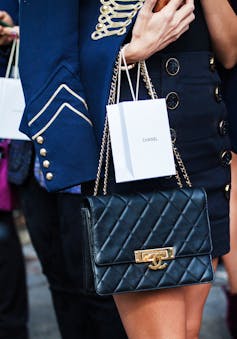
Striking a pose in billowing white couture and French lace on the Croisette at Cannes during the film festival. Photograph by Andrea Heinsohn for DAM.
The 78th Cannes International Film Festival offered far more
than red-carpet spectacle, its true spirit unfolded along the Croisette, where
street style, spontaneous encounters, and the tireless dance of photographers
created a living portrait of the festival. From fashion statements born in the
sunlit bustle to the charged energy surrounding daily premieres and seaside
happenings, Cannes revealed itself as a vibrant cultural stage where cinema,
style, and human moments intertwined, writes Antonio Visconti. Photography by Andrea Heinsohn
Ballgowns and jeans and t-shirts
all mix on the Croisette at Cannes.
IN Cannes, the annual film festival unfolded this
year with all the shimmering unpredictability that has long made the palm-lined Croisette
a stage as compelling as any cinema screen. While the red carpet remained the
festival’s ceremonial heart, the true story of Cannes played out on the
sun-washed boulevard outside the Palais des Festivals, where fashion, frenzy, and fleeting
moments converged in an irresistible daily performance.
From early morning, the Croisette became a runway of its
own, alive with actors, directors, producers and cinephiles dashing between
screenings and seaside cafés.
Street style at Cannes has always been a uniquely
global blend, but this year felt especially expressive: Italian linen
tailoring, sculptural Japanese silhouettes, Riviera-chic ensembles in sun-faded
blues, and bursts of couture-level glamour stepped straight off yachts and into
the crowd. The laissez-faire elegance of Cannes mingled seamlessly with
high-voltage fashion statements, oversized sunglasses, silk scarves fluttering
in sea breezes, metallic handbags catching the light like jewellery.
And then there were the photographers, a guild
whose energy shaped the atmosphere as much as any celebrity appearance.
Positioned along the red carpet, lining ladders above barricades, darting through the crowds, or crouched low on
pavements, they worked with a choreography all their own. Their lenses chased
everything: star arrivals, glimmers of vintage Chanel drifting past on
bicycles, unexpected reunions between directors, or simply a stranger whose
look demanded attention. In Cannes, anyone can suddenly become a subject. The
photographers know this better than anyone, and their instinct for spontaneity
is what gives the festival its pulse.
At dusk, a golden wash of Côte d'Azur sunlight illuminated the Croisette, turning the palm-lined boulevard into a cinematic frame
Photographers bring their own
ladders to capture all of the red
carpet action at the festival.
Throughout the day, the Croisette thrummed with
happenings, pop-up interviews, brand launches, and impromptu fashion shoots
unfolding against the Mediterranean backdrop. At dusk, a golden wash
illuminated the boulevard, turning every step into a cinematic frame.
Crowds
gathered outside the Palais as the evening premieres drew near, the
anticipation almost physical. Tourists craned for glimpses of stars, while
photographers jockeyed for position, shouting cues, adjusting lenses, and
capturing images destined to circulate worldwide within minutes.
Beyond the glamour, Cannes remained about human connection: actors
paused to greet fans; directors chatted with students; festival guests shared
laughter over gelato on the promenade. Our reportage captures these
contrasts, the grandeur of couture brushing against the easy charm of a festival
lived in the streets.
In the end, the 78th Cannes Film Festival was more than a
celebration of cinema. It was a living tableau: vibrant, unpredictable, and
visually intoxicating. And on the Croisette, every passerby, every flash of a
shutter, and every burst of Riviera light played a role in the ongoing
mythology of this French filmic icon.
Scroll down to see more moments from the Cannes Film Festival by Andrea Heinsohn
Research shows those who personalise items with their name worry more about being negatively judged than those who purchase non-customised items. Pictured is Italian entrepreneur Chiara Ferragni with her own name on a Dior tote.Cover picture by Andrea Heinsohn for DAM
By Anne-maree O'Rourke
You might think spending $5,000 on a handbag or wallet would be prestigious and exclusive enough. What about taking things one step further – and personalising it with your own name? Brands including Gucci, Louis Vuitton and Dior now offer extensive customisation options – some for a few products, others for their entire range. Names and initials are an obvious, popular choice.
Some have hailed personalisation as the future of luxury goods. But it’s worth asking – could there be any downsides?
Research has shown there’s a trade-off to signalling social status with luxury goods. Luxury consumers are often perceived as less warm and friendly, more concerned with managing their image.
Our recent research examined whether name-stamping could increase this social cost. Our findings suggest for some customers, it can – increasing their fears of being negatively judged.
One-of-a kind products
These personalised touches are marketed as unique, one-of-a-kind products. They’re designed to appeal to a desire for individuality and exclusivity.
For luxury buyers, customisation offers a way to showcase their personality, passions and interests. It can enhance their feelings of connection to a brand and sense of psychological ownership of an item.
A promotional video showing personalisation options for Dior’s “Book Tote”.
Enabling consumers to co-design a product can also help alleviate the impostor syndrome some consumers experience when buying high-end luxury items.
For the brands themselves, personalisation services can increase profit margins, improve market appeal and strengthen customer loyalty.
Much of this trend has been fuelled by millennial and Gen-Z luxury consumers, who are increasingly seeking out unique, tailor-made experiences.
Luxury brands are adapting to changing trends.Alya108k/Shutterstock
By 2030, it’s expected that millennials and Gen-Z will account for 60–70% of all luxury purchases.
A 2017 survey found more than half of millennials who’d recently made a luxury purchase were willing to pay more for personalised luxury goods.
We love our own names
The popularity of name-stamping, in particular, may come down to a concept called “implicit egotism”.
Research suggests most people have a subconscious positive association with themselves. This extends to a preference for things that are connected to their sense of identity – such as the letters of their own name.
The drawbacks of personalisation are less widely discussed. One clear one is its impact on resale value. Personalised items are harder to sell.
This is particularly relevant for Australia’s booming second-hand luxury market, driven by younger consumers prioritising sustainability and affordability.
Research also suggests that excessive customisation – letting customers make design decisions on custom colours, fabrics, and so on – can decrease the signalling value of luxury items and undermine their status appeal.
One popular choice is to personalise items with a customer’s name or initials.Screenshot from au.louisvuitton.com
Luxury’s social cost
Then there’s the cost that can come with luxury itself.
Research has shown luxury consumers can be perceived as less warm and friendly than those who forgo luxury.
Interestingly, this perception isn’t driven by envy. Rather, it stems from a belief that luxury wearers are actively managing their image to impress others.
Does name-stamping luxury increase this social cost even more? Our research, with co-authors Joanna Lin, Billy Sung and Felix Septianto, suggests the answer is yes.
Research suggests luxury goods can make the wearer seem less warm to others.Body Stock/Shutterstock
We conducted four studies with 1,354 female luxury and non-luxury shoppers from the United States.
We found consumers who personalise luxury items with their name worry more about being negatively judged than those who purchase non-customised items.
This effect was consistent, regardless of whether the personalisation featured initials or full first names.
The overtness of name personalisation, in particular, may explain the added social cost. Customising a bag with a non-standard colour might only catch the eye of a luxury brand enthusiast. A prominently displayed name, however, unmistakably signals customisation to everyone.
Not all fear judgement
Importantly, we found not all luxury consumers share this fear of judgement equally. The impact depends on individual motivations for purchasing luxury items to begin with.
Those who are motivated to consume luxury goods for social reasons, such as standing out, are less concerned about receiving negative judgement from others.
Some luxury customers don’t worry about negative judgement.Street style photo/Shutterstock
In contrast, those who are motivated to buy luxury items for more individual reasons are more wary of how name personalisation might be judged.
For this group, which made up about half of the consumers we sampled, subtle, customised touches could be a more appealing option.
There could also be some variation across different cultures.
A report by KPMG found Chinese consumers – a group not included in our study – often seek luxury consumption as a means of social advancement and self-differentiation, meaning they are likely less concerned about the social costs.
On the other hand, we could speculate that Australian consumers, influenced by the “tall poppy syndrome” cultural phenomenon, may be even more sensitive.
Anne-maree O'Rourke, Lecturer in Marketing, The University of Queensland
Leonardo Di Caprio, left, looks on as Robert De Niro accepts his Honorary Palme d'Or during the Cannes film festival and gives a speech critiquing the new proposed tariffs saying; 'You can't put a price on connectivity.' Photograph by Joel C Ryan/Invision/AP. Cover picture by Andrea Heinsohn for DAM
By Gaelle Planchenault
With the 78th Cannes International Film Festival underway this week, there is little doubt that one topic will be central to conversations among filmmakers, sales agents and journalists: United States President Donald Trump’s threat to impose a 100 per cent tax on foreign-made films.
On the opening night, Hollywood icon, Robert De Niro set the tone as he accepted his honorary Palme d'Or award. He used his podium to critique Trump’s actions in the arts, especially Trump’s proposal to tax foreign-made films. He said: “…art is the crucible that brings people together…. Art looks for truth. Art embraces diversity. That’s why art is a threat.” He also added: “you can’t put a price on connectivity.”
Amid an ongoing tariff war, Trump’s proposal — which may ultimately remain an empty threat — goes beyond economic protectionism. It is cultural protectionism. It also reflects language ideologies that have long constrained the American film industry and American engagement with multilingual cinema.
Experts have offered various theories about the motivations behind this threat, as well as why it may ultimately prove unwise. In the rush to brace for impact, we often forget the values behind these extreme positions aren’t new. More importantly, we must also remember why it’s vital to protect these cultural expressions.
As a linguist, I see a clear connection between this proposal and one of the administration’s actions earlier this year, when Trump signed an executive order designating English as the country’s sole official language. This move reflected a deeply rooted monolingual ideology that has long influenced both the U.S. language policy and education systems.
Monolingual ideology
Such language ideology reflects a belief in the superiority of monolingualism, a view that American linguist Rosina Lippi-Green links to the “myth of Standard American English.”
This myth is grounded in the subordination by one dialect, believed to be of higher quality and status, over other languages and dialects. According to Lippi-Green, the enforcement of this ideology follows a systematic process: language is mystified, authority is claimed and a series of negative consequences ensue. Misinformation is generated, targeted languages are trivialized, non-conformers are vilified or marginalized and threats are made.
Such authority and threats are recognizable in this most recent threat to make access to foreign films difficult. The issue is not just about the economic dimension of foreign-made films. It is also about the perceived threat posed by the presence and influence of other languages. At its core, this reflects a fear or rejection of linguistic diversity.
In the film industry, this monolingual ideology is closely tied to glottophobic attitudes, also referred to by some scholars as linguicism. These terms define the misrepresentation and negative stereotyping of speakers of languages other than English.
Hollywood, in particular, has a long history of portraying foreign or heritage languages in stereotypical and often derogatory ways. Consider, for instance, the German-speaking characters in Second World War films, or more recent depictions of Arabic, Mexican Spanish or Russian speakers.
These portrayals illustrate a tendency to depict other languages as menacing — a point that was also made in the American president’s claim that foreign films pose a “threat” because they constitute “messaging and propaganda.”
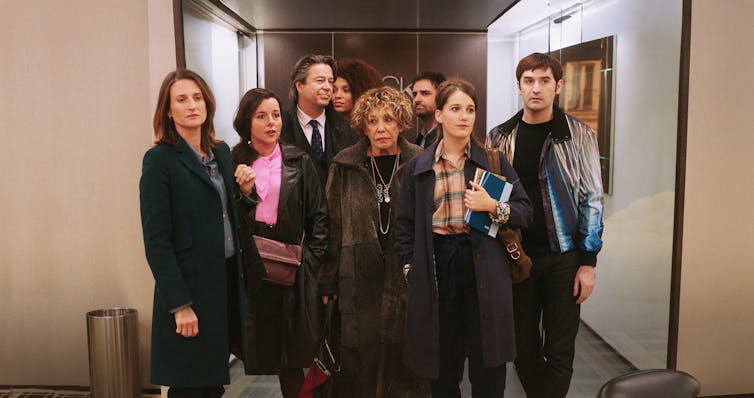
A press image for the show Call My Agent which has been a global success.Netflix
Linguistic stereotyping
It’s not just characters who speak other languages who have been misrepresented in American films. Those who speak English as a second language — that is with an accent or with a syntax that is marked by their first language — were often played by white actors and subject to similar derogatory stereotypes.
Linguists have identified patterns in these linguistic representations, referring to them as Injun English, Mock Spanish or yellow voices, among others.
Lippi-Green has famously argued that such linguistic depictions are ways to reinforce standard language ideologies through linguistic stereotyping in media, including popular Disney cartoons. They effectively teach American children how to discriminate.
In my work, I examined French-accented English to demonstrate that these representations reflect broader cultural anxieties. Ultimately, this rhetoric reveals more about the U.S. relationship with linguistic diversity than it does about the communities being portrayed.
Trump has made reference to “any and all movies coming into our country that are produced in foreign lands.” But it remains unclear how such measures would impact streaming platforms and the diverse range of films they currently offer.
Hollywood has come a long way since the heydays of linguicism, gradually embracing a more inclusive and multilingual cinematic landscape. Today, films that present a more diverse linguistic landscape are increasingly common. And audiences are accustomed to having access to a wide selection of international content.
The global success of the French series Call My Agent is just one example. Among others are popular French spy thrillers and romances, Swedish thrillers, Japanese anime and Korean dystopian series.
The pleasure of watching foreign films
For years, foreign language films have been recognized as an invaluable resource for language learning. This fact is supported by language learning apps that increasingly recommend users to view TV programs or movies to support learning. Movies and TV provide access to a variety of dialects as well as authentic forms of language.
As a professor of French media and linguistics, I often use films to teach students about French language and culture. But beyond their educational benefits, foreign-language films offer unique esthetic and emotional pleasures.
Watching a film is to engage with sound and image. The language itself enhances the immersive experience, contributing to the authenticity of the storytelling. For example, one of my students told me he enjoys turning on closed captions in French. These are also known as SDH: Subtitles for the Deaf and Hard-of-Hearing. He does this not just for the dialogue but because they capture the full cinematic experience, including the naming of sounds.
Restricting access to these cultural products would trap viewers in an ideological echo chamber, where only one language is heard and validated.
Fictional representations play a powerful role in shaping and reinforcing real-world attitudes. Monolingual representations potentially foster linguistic discrimination and intolerance toward any word uttered with an accent or in another language. In short, such restrictions could pave the way for a partial and stunted society.
Gaelle Planchenault, Associate Professor of French Media, Culture, and Applied Linguistics, Simon Fraser University